- (Mon. - Fri 08:00 - 18:00) (Sat 08:00 - 15:00)
- +90 462 227 6100
- [email protected]

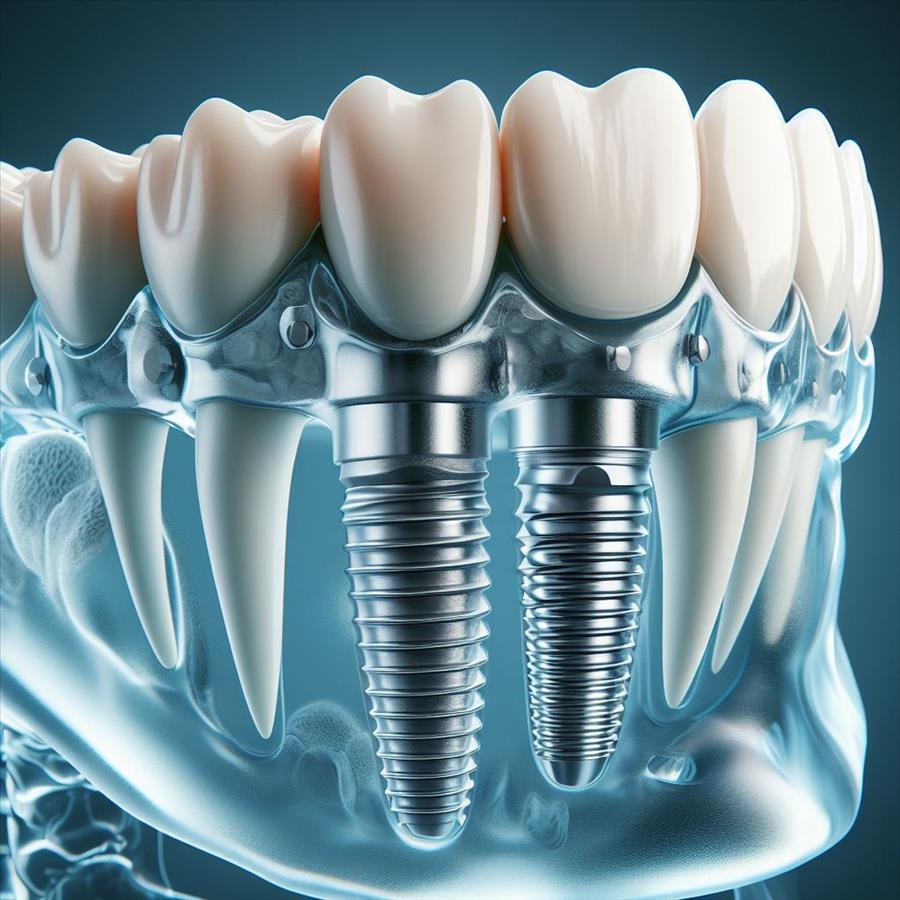
A structural dental solution that replaces missing teeth with biocompatible titanium roots to restore natural chewing power and smile esthetics.
Losing one or more teeth is more than a cosmetic concern; it breaks the structural harmony of the mouth, causing neighboring teeth to drift and altering bite mechanics over time. Traditional bridges often require trimming down adjacent healthy teeth, which can compromise their longevity. Modern implantology bypasses this drawback by addressing the missing tooth root directly. By functioning independently within the jaw, implants mimic the anatomy of natural teeth, offering a stable foundation that prevents bone deterioration and restores complete chewing efficiency.
The remarkable success of dental implants relies on the biological compatibility of titanium with living bone tissue. Once placed, the microscopic surface of the titanium fixture prompts bone cells to attach and grow directly onto the implant, a process medically termed osseointegration. This vital fusion integrates the artificial root into the jaw skeleton, allowing it to withstand vertical occlusal forces. Furthermore, by transmitting natural chewing pressure back into the bone, implants actively signal the body to maintain bone density and stop the structural resorption that typically follows tooth loss. At Akçadent Oral and Dental Health Polyclinic, advanced three-dimensional digital imaging is utilized to map out bone density and locate the anatomically ideal placement pathways before any intervention begins.
Modern implant workflows are engineered to be minimally invasive, carried out under targeted local anesthesia to guarantee an entirely painless and predictable patient experience. The overall clinical process transitions through specific surgical and restorative milestones:
When teeth have been missing for an extended period, or if severe periodontal disease has pre-existed, the jawbone can experience noticeable atrophy, shrinking in both vertical height and horizontal width. A substantial, healthy volume of surrounding bone is a mandatory medical requirement to provide a stable, long-term matrix for any dental implant. For patients facing bone insufficiency, sophisticated bone grafting techniques are implemented, including sinus lift procedures or the application of synthetic or autogenous bone matrices. These advanced preparatory surgeries successfully rebuild the missing skeletal architecture, ensuring that even complex cases have a sound, durable foundation for future implant loading.
Following the surgical placement of an implant, minor localized swelling or mild tenderness around the soft tissues is a standard physiological healing response that usually subsides within a few days. During the critical first 48 hours post-surgery, patients must completely avoid extremely hot foods, carbonated beverages, and smoking, as nicotine constricts blood flow and directly hinders initial tissue healing. Once the final crown is fitted, maintaining a dedicated home hygiene regimen is paramount to preventing peri-implantitis—an inflammatory condition similar to gum disease. Akçadent Oral and Dental Health Polyclinic advises incorporating specialized interdental brushes and oral irrigators alongside routine brushing to protect the surrounding gums and preserve the lifespan of the implant for decades to come.
If the jawbone volume or density is insufficient, a bone graft (bone powder) application may be necessary before or during the procedure to ensure the implant fuses healthily and forms a strong foundation.
You should not eat anything until the numbness completely wears off (about 2–3 hours) after the operation. For the first few days, soft and liquid-based foods at room temperature should be consumed to protect the implant area.
Implants made of titanium are biocompatible materials, so body rejection is not possible; however, factors like poor oral hygiene or smoking can negatively affect the fusion with the bone during the early stages.
If there is no infection in the extraction area and the bone structure is suitable, it is possible to place the implant during the same session as the tooth extraction (immediate implantation).
To allow the implant to fully integrate with the jawbone (osseointegration), a waiting period of 3 to 4 months for the upper jaw and 2 to 3 months for the lower jaw is usually required before permanent prostheses are attached.