- (Mon. - Fri 08:00 - 18:00) (Sat 08:00 - 15:00)
- +90 462 227 6100
- [email protected]

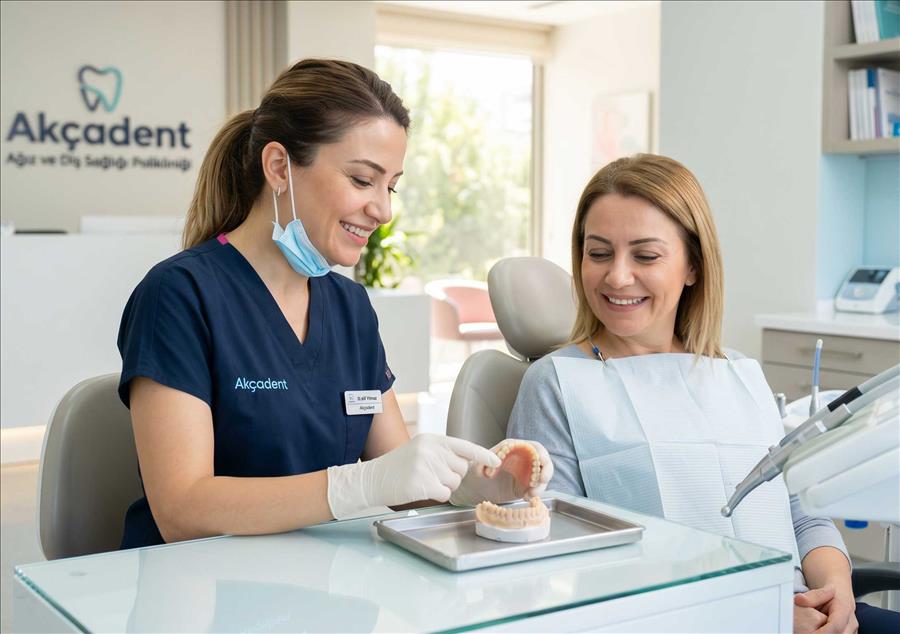
Fixed, removable, and implant-supported denture solutions designed to restore chewing function and aesthetic harmony caused by tooth loss.
Losing natural teeth or experiencing severe tissue destruction due to various dental conditions significantly disrupts masticatory function and negatively impacts an individual's overall quality of life from an aesthetic standpoint. Over time, the resulting gaps within the oral anatomy can cause adjacent teeth to tilt into the empty spaces and trigger jawbone resorption, which refers to the gradual erosion of bone structure. In the essential process of restoring these missing structures both biologically and mechanically, dental prostheses stand out as one of the most fundamental and highly functional solutions in modern dentistry.
Every patient presents a completely unique oral anatomy, bone density, existing dental health condition, and set of aesthetic expectations. Consequently, prosthetic treatment plans are meticulously tailored to the individual. Designed primarily as either tooth-supported or implant-supported restorations, these advanced clinical approaches successfully reinstate the overall integrity of the oral environment.
When a patient experiences a limited number of missing teeth and possesses healthy adjacent teeth on both sides of the gap, fixed restorations are typically preferred. Traditional dental bridges and single-tooth crowns fall into this category. Zirconium or full-ceramic blocks, frequently utilized within the clinical workflows of Akçadent Oral and Dental Health Polyclinic, serve as biocompatible materials with exceptional light transmittance, thus granting patients a highly natural tooth appearance. Because these prostheses are permanently fixed, they cannot be removed by the patient and are easily maintained through standard daily tooth brushing routines.
Removable alternatives are introduced in cases involving extensive tooth loss or when there are no suitable remaining anchor teeth capable of supporting a permanent fixed restoration. This category includes complete dentures (commonly known as false teeth or plates) designed for entirely edentulous arches, as well as partial dentures that derive mechanical support from surviving teeth via specialized clasps. Today, precision attachment systems (snap-on dentures) and flexible acetate-based prostheses have eliminated the aesthetic concerns traditionally caused by visible metal clasps, significantly enhancing retention while creating a far more natural-looking smile design.
The highest level of comfort achieved in modern prosthetic technology is undoubtedly implant-supported restorations. Anchored securely by titanium screws surgically placed directly into the jawbone, these advanced systems give patients the precise sensation of chewing with their own natural teeth. For fully edentulous patients, the common disadvantages associated with traditional complete dentures—such as slipping, painful mucosal irritation, or speech impediments—are completely eliminated through implant-supported solutions. Thanks to All-on-4 or hybrid prosthesis approaches, it is entirely possible to construct a fully fixed and comfortably stable structure for patients who prefer not to use removable devices.
Regardless of the prosthetic method selected, the ultimate clinical success of the treatment is directly dependent on the exceptional quality of the materials used and the micro-precision of the laboratory fabrication process. Detailed impressions taken in the clinical environment are transferred to digital software using advanced intraoral scanners to manufacture structural designs with micron-level fit accuracy. Extending the functional lifespan of prostheses within the oral cavity is fundamentally dependent on protecting the health of the underlying tissues.
At Akçadent Oral and Dental Health Polyclinic, we meticulously implement the latest material technologies and clinical protocols while restoring the lost chewing comfort and smile aesthetics of our patients. Timely replacement of missing teeth through appropriate prosthetic methods not only relieves the digestive system by ensuring proper mastication but also supports the facial musculature, helping you maintain a much younger, distinct, and dynamic facial profile.
The number of missing teeth, the overall health of remaining teeth, and the structural condition of the jawbone are thoroughly evaluated through clinical examinations and radiological analysis. For total tooth loss, complete dentures or implant-supported solutions are preferred, while dental bridges or partial dentures (with clasps or precision attachments) are planned for partial tooth loss based on the patient's comfort and expectations.
During the initial adaptation phase, a slight movement is normal while the oral tissues adjust to the prosthesis. However, modern dentures fabricated with precise impression techniques sit accurately on the jawbone, maximizing retention through the vacuum effect created by saliva. For cases with severe bone resorption, implant-supported denture alternatives are recommended to ensure permanent stability.
Removable dentures should be taken out after every main meal and cleaned with a soft brush using non-abrasive soap or specialized denture cleaning gels. To allow oral tissues to rest, dentures must be removed before sleep and stored in a container filled with water containing specialized cleaning tablets. Maintaining fixed bridges requires thorough cleaning under the bridge using dental floss and interdental brushes.
In dental bridge applications, the supportive teeth adjacent to the gap must be prepared and slightly reduced in size. When performed by expert dentists using precise, conservative approaches, this procedure does not harm the biological integrity of the teeth; rather, the crown fully covers and protects them. As long as optimal oral hygiene is maintained, there is no increased risk of decay or shortened lifespan for the supporting teeth.