- (Mon. - Fri 08:00 - 18:00) (Sat 08:00 - 15:00)
- +90 462 227 6100
- [email protected]

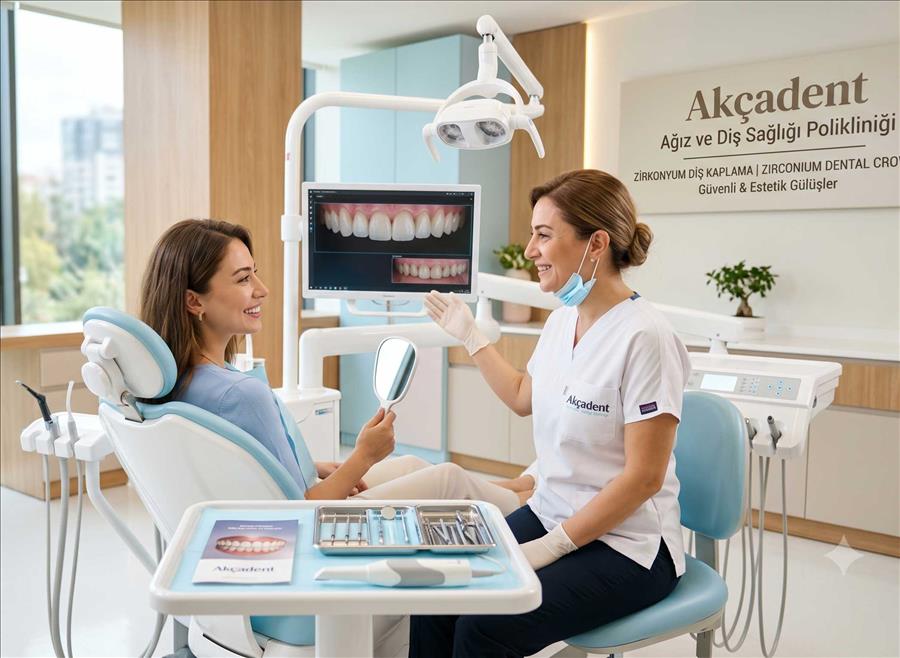
An informative medical page on the features of zirconium crowns, highlighting their natural enamel-mimicking light transmittance and high biocompatibility.
Modern restorative dentistry has entered a new era with the use of highly biocompatible materials that meet aesthetic expectations at the highest level. Replacing traditional metal-supported porcelains, restorations made from zirconium stand out due to their durability and exceptional light transmittance. Allowing for aesthetic results closest to the natural tooth structure, this advanced material offers a reliable medical solution for addressing aesthetic concerns in front teeth and providing the necessary mechanical resistance for back teeth.
Zirconium is a white metal alloy that has been safely used in the biomedical field for many years, thanks to its tissue-friendly structure and outstanding resistance to corrosion. In a dynamic environment like the oral cavity, which is constantly exposed to moisture, temperature fluctuations, and mechanical forces, zirconium frameworks successfully maintain their structural integrity. In the restorative processes we conduct as Akçadent Oral and Dental Health Clinic, the seamless integration of this material with the gum tissue and its neutral nature that prevents halitosis are among the primary factors directly increasing clinical success.
The greatest aesthetic advantage of zirconium crowns is their ability to transmit light semi-permeably, just like natural tooth enamel. The matte, lifeless appearance often encountered in metal-supported prostheses and the dark discolorations forming at the gum line do not occur with zirconium sub-structures. This optical property of the material ensures that the final restoration integrates fully with the patient's own teeth, looking like a natural extension rather than an artificial design. Processed with micron-level precision using computer-aided design and manufacturing technologies (CAD/CAM), zirconium blocks are prepared to fit the patient's individual jaw anatomy and alignment perfectly.
The most fundamental criterion for a healthy prosthetic application is that the restoration does not harm the surrounding tissues. Zirconium is an exceptionally safe material that minimizes the risk of allergic reactions. In addition to being an ideal alternative for patients with metal sensitivities, its smooth surface structure significantly prevents plaque accumulation. The reduced risk of gum recession following the restoration, combined with the biological harmony the crown establishes with the surrounding tissues, opens the door to a long-term oral health concept.
The treatment process begins with a detailed medical analysis of the patient's oral structure and the acquisition of digital impressions. The teeth are minimally shaped to accommodate the crown. Prepared in a laboratory environment, the custom zirconium blocks are meticulously trialed by our clinicians. During these trials, fit, functional occlusion, and anatomical form are thoroughly evaluated before the final cementation process is completed.
To ensure the longevity of zirconium crowns and to maintain their structural resilience, it is of critical importance that patients avoid breaking hard-shelled foods with their teeth and do not neglect routine dental check-ups.
To receive detailed medical information about the most suitable restorative options for your oral structure, zirconium crowning methods, and our pre-examination processes, you can contact our clinic at any time.
The smooth and glass-like surface structure of zirconium crowns prevents the accumulation of food particles and coloring pigments. Therefore, they resist staining caused by external factors such as tea, coffee, and smoking, maintaining their natural whiteness for many years.
Unlike traditional metal-supported porcelain crowns, zirconium does not contain any metal in its substructure. Since it is completely metal-free, it does not cause any gray or purple tint reflection around the gum line due to corrosion over time, showing an excellent biocompatibility with the gum tissue.
Zirconium material possesses a much lower thermal conductivity compared to metal restorations. Thanks to this insulating feature, it protects the underlying natural tooth structure against sudden temperature variations of the external environment. Except for a minor adaptation period right after the treatment, no long-term sensitivity or pain is experienced.
In addition to its high aesthetic advantages, zirconium is a highly durable crystalline material with outstanding resistance against biting and chewing forces. Due to this superior structural durability, it is safely preferred for bridge and crown restorations even on posterior molar regions where chewing pressure is at its peak.